Title

Sufficient for Our Need
Striving for Self-Sufficiency in the Modern World
Showing posts with label garden. Show all posts

Sunday, October 6, 2013

October Onion and Garlic Report

Yesterday, i weeded the onion/garlic patch, leaving the onion shoots I saw in place. Actually, I had been weeding all along ever since I planted and the first sprouts came up, but I had left the weeds in place in the areas between each sprout. So, yesterday, i just cleaned the whole bed free of weeds and grass. I counted about 50 sprouts. Given that I planted to grow about 150, I'm not feeling entirely successful.
I had added new seeds to some of the area before I left for Northern Ireland a couple of weeks ago. But it really hasn't rained since and I haven't watered. As far as I know, these seeds are still just sitting in the ground. I watered after I weeded yesterday, so perhaps new sprouts will emerge. I can be patient and will continue watering now that I am home.

It occurred to me this morning that my strategy could use a little adapting. When I planted earlier I went through an elaborate strategy to glue seeds to napkins. For my pre-Irish catch-up, I just sprinkled seeds. Of course, getting seeds requires breaking open pods, which is also laborious. Today I thought, why not just plant the pods? There are probably (someone should really know for sure) 4 to 6 seeds in each pod. That's how nature probably does it; keeps the seeds in the pod until they sprout. So I took 50 seed pods (pictured) and planted them directly in the soil. I know where I planted them so we will see how they sprout.

I can think of two additional reasons (other than ease) for keeping seeds in the pods and just planting the pods. First, taking the seeds out of the pods might be damaging to the seeds. You often have to crush to pods to break the seeds loose, which might cause harm to the seeds. Second, the way pods are constructed, it would seem that they have a natural ability to trap just a little bit of moisture. This may be important for germination.

Garlics on the other hand have sprouted well. Of the 32 cloves I planted, 31 have come up. I will have more garlic than I can use, but there are always friends and other gardeners.

Saturday, August 31, 2013

Garlic and Onions

I only planted 8 cloves of Chet's red garlic last fall. Only 7 came up. Of those, I did something with 5, leaving just 2 for planting this fall. The ones from the previous season had sprouted this spring, and I planted a number of them. I harvested all of the spring planting, leaving none of them for seed for the coming year. Of the 2 garlic that I set aside for planting, I was able to get about 40 cloves. I kept 32 of them for my own garden and gave the remainder to my friend Steve at church.

I planted the 32 during the week. Nothing has come up yet. I don't need them all to sprout, but I am glad to keep the variety growing in my garden.

Last fall, I scattered onion seed in one of my beds. I think my reasoning had been that trying to plant the year before in prespecified positions hadn't worked well. The sprouting was spotty. But there were two problems last year. First, there were just too many onions that sprouted. Second, I think all the seed came from first-year plants, meaning that for what is supposed to be a biannual, there was no "bi" in when the plants went to seed. As a result, just about every onion in my garden went to seed again this year. Essentially, my onions became annuals.

This year, I am attempting to solve both problems. I am attempting to solve the first problem of scattering seed by going back to a 4-per-square-foot planting system. I used napkins and a glue stick to allow me to create little patches of seeds. Then, I cut up the napkin so I could plant each bunch of seeds separately. I picked a napkin as the medium to glue the seeds on because I think the paper will dissolve pretty rapidly once wet, allowing the seed to send its roots down. I planted these today, 4-per-square-foot, more or less evenly throughout the same bed in which I planted the garlic. (The garlic occupy 2 of the 12 feet, the onions the remaining space.) I hope to have about 150 or so onions from this. That will be plenty to harvest next June.

The second issue was using annual seeds instead of biannual seeds. I purposely kept about 10 onions (long red Florence) alive through the winter and let them go to seed the second year. I used those seeds, as I trust that only a few will got to seed early. That variety was generally a better variety for not going to seed early when I have raised them in the past.

Now seeds and cloves just have to sprout.

Saturday, August 24, 2013

Great Balls of Dirt

I thought I was through writing about sunflowers, but there is always clean up to consider. It occurred to me, of course, that for a plant to grow as thick and as tall as a sunflower, it had to have roots. But, having never seen a sunflower root before, I didn't quite know what to expect. Each plant was pretty well anchored with a good thick ball of roots. I wasn't successful uprooting plants until I used the garden fork to loosen dirt around the base of the plant. But even then, the root came up as a large ball. Indeed, taking care of each sunflower was about like trying to deal with a small tree.

The next challenge I faced was just how to get to dirt off of the root. In a raised bed, dirt is precious. And it is apparent that a lot of whatever was in the dirt was up in the air in the stalk of the sunflower plant. Many of the stalks were about an inch in diameter at the base. My solution to getting the dirt off involved finding yet another use for the cold frame hoops. I primarily use the cold frames to brace myself while I bend over the garden boxes. The second use is when I grow tomatoes, as a way of anchoring the cages so they don't blow over when the tomatoes get big and the wind blows. Their use for me as a device to hold up plastic sheeting in the winter is in doubt. (I wasn't very successful growing things in the past this way.) So now the next use is as something to bang the root ball against to get the dirt attached to the roots of sunflowers off and back into the raised bed.

Saturday, August 3, 2013

Purple Sunflower Seeds


From what I have read, there are basically two types of sunflower seeds; black, which are oily, and white with gray stripes, which are best for eating. So, as I have been harvesting, I've looked to see what each sunflower head yields. I find it a curiosity primarily because I thought all of the seeds Jenna and I planted would bear the snacking variety.

In fact, most are either quite white with very light gray striations. There are some black seeds as well. It makes sense because some of the seeds that were planted were black. But then, I saw the sunflower head on the left of the photo. These seeds are clearly different than the rest of the heads. I placed it next to a typical light colored sunflower just to show the contrast.

I just harvested this one, so I'm not sure how it will end up. Perhaps the seeds will change color when they dry.

I searched and found that there are others who have also reported this. For example, Project Noah reported about a similar harvest. I even found a research abstract that addressed the issue.

The anthocyanin pigments in hulls of purple sunflower seeds have been identified by chromatographic, spectral and chemical properties. The four most abundant anthocyanins were identified as cyanidin 3-glucoside, cyanidin 3-malonylglucoside, cyanidin 3-xyloside and cyanidin 3-malonylxyloside. This is the first report of malonylated anthocyanins in sunflower seeds and the first characterization in plants of the malonyl xyloside.

If that's not informative, what is? My guess is that there is some mutation that I somehow picked up on. I plan to save some of these seeds and replant next year to see what I get.

Green Beans


We have green beans aplenty!

I planted Blue Lake beans four per square foot in one of my raised beds. So far we have picked about a third of the bed and have two plastic grocery bags full. I don't know exactly what we will do with them all. It's not like we eat that many!

Before we started to harvest, I picked a few one day for dinner. We watched Matt (our grandson) one evening and picked some more. His job seemed to be to dump them out of the bowl we were putting them in, then pick them up and put them back in the container.

Kathy and I went out the first evening we actually decided it was time to harvest or lose the crop. I think we picked for half an hour. I followed the next evening and did another half an hour's worth of picking. I think one more trip to the bed will complete the gathering task.

These beans are planted in the last raised bed to be built. The soil consists primarily of some sort of compost with about half a yard of peat moss mixed in. I don't consider it to be my best bed. But, as you can see from the photo, each plant seemed to do quite well in terms of numbers of beans produced and their size.

Sunday, July 28, 2013

Start of the Sunflower Harvest


Jenna was home for a day from her summer camp. While she was here, I thought we should start harvesting the sunflowers. Most of the Mammoth variety are still not quite there yet, although we did harvest one head. The Lemon variety were much more ready. In fact, the birds had already done a decent job on a number of the flowers. Still, we harvested more than a dozen flowers that seemed to have a number of seeds still in them. The Lemon variety have multiple flowers per plant. The Mammoth have only one, but it is much larger. The photo is of Lemon variety flowers.

The plan is to follow what has been published. The flowers now sit in a paper bag, waiting for them to dry.

One thing I have noticed is that the seeds all seem to hold to either the confectioner shades of gray and white or the oil producing shades of black, like the one in the lower right of the photo. In theory, all of the seeds planted this year were confectioner. My reading suggests that we may actually have a mixture of oil bearing and confectioner types.

Wednesday, July 17, 2013

Sunflowers -- Two Kinds


Jenna wanted to plant sunflowers this year. Entirely her choice. So, I figured out that we could plant 23 per 12' x 4' raised bed planter if we put 8 down either side and 7 down the middle, spaced so that they were 18" apart. What we had on hand were a variety known as lemon sunflowers. I bought two packets of seeds last year because I had the intention of participating in some sort of bee counting exercise and lemon sunflowers were what was called for. I never planted any, so we had just about enough to fill two planters (56 sunflower plants). Of course, once planted, not all came up. (I even pulled one out by accident.)

The obvious solution was to go buy more seeds. The variety that was in the store was called mammoth. So, in the spots were the lemon sunflowers didn't sprout, I replanted mammoth. Eventually, all the spots I had reserved for seeds had sunflowers growing in them. The lemon variety were supposed to get between 6 and 8 feet tall. The mammoth variety was supposed to get 12 feet tall.

Before Jenna left for the first of her many summer camps, I took a photo of her standing in front of the plants. She is 5'2" or so. The ones that bloomed at this point in time were mostly the lemon variety sunflowers. When I first saw them, I was confused because I expected there to be just one bloom and that at the top. Lemon sunflowers produce multiple flowers. By now, because I figured out how to grown them but not harvest them, the gold finches have pretty much stripped them of seeds.

On the other hand, the mammoth sunflowers are behaving more like I expected. The flowers are bigger and there is just one per plant. They are coming in much later. And true to what was promised on the package, the stalks are much taller. I think 12' may be just about what the tallest among them are. Maybe by the time they are all pollinated, I will have figured out how to harvest the seeds before the birds get all of them. Right now, as you can see in the photo, the bees are just getting around to pollinating them. (Not my bees; the hive died.) I think the bee in the photo is actually a bumble bee.

So, Jenna's idea has turned into an interesting plant. I think she just wanted to see the flowers and doesn't care about the seeds. The birds clearly care about the seeds. I can imagine growing some of both varieties each year. Easy to grow. Big! And useful for someone.

I learned that there are two major classes of sunflower seeds. What they call confectioner (meaning, I suppose that the seeds are good for eating as a snack) and oil producing. I believe what I have planted are all confection types. So, if I actually plan this for next year, I would like to experiment with some oil producing varieties.

Saturday, June 2, 2012

46 Garlic


Today I harvested garlic. I had plucked out a couple before today and plucked 46 more today. Many of the bulbs had started to make offshoots. Left with their stems on, I figure it amounts to about 20 pounds. Honestly, this is more than we will use in a year. I harvested 30 something last year and ended up giving at least half away. This year, I will try to do something different, like mincing some and either drying the garlic or mixing it with olive oil or something. I think I will look online for ideas. For now, I have then braided and hanging in the garage to dry.

Just for the record, these garlic are from cloves I harvested last year. Nearly all cloves came up. I believe they are Chet's Red.

Thursday, November 24, 2011

Still Alive


Admittedly, not much happens in the garden or with bees on Thanksgiving. However, I have a small report to make.

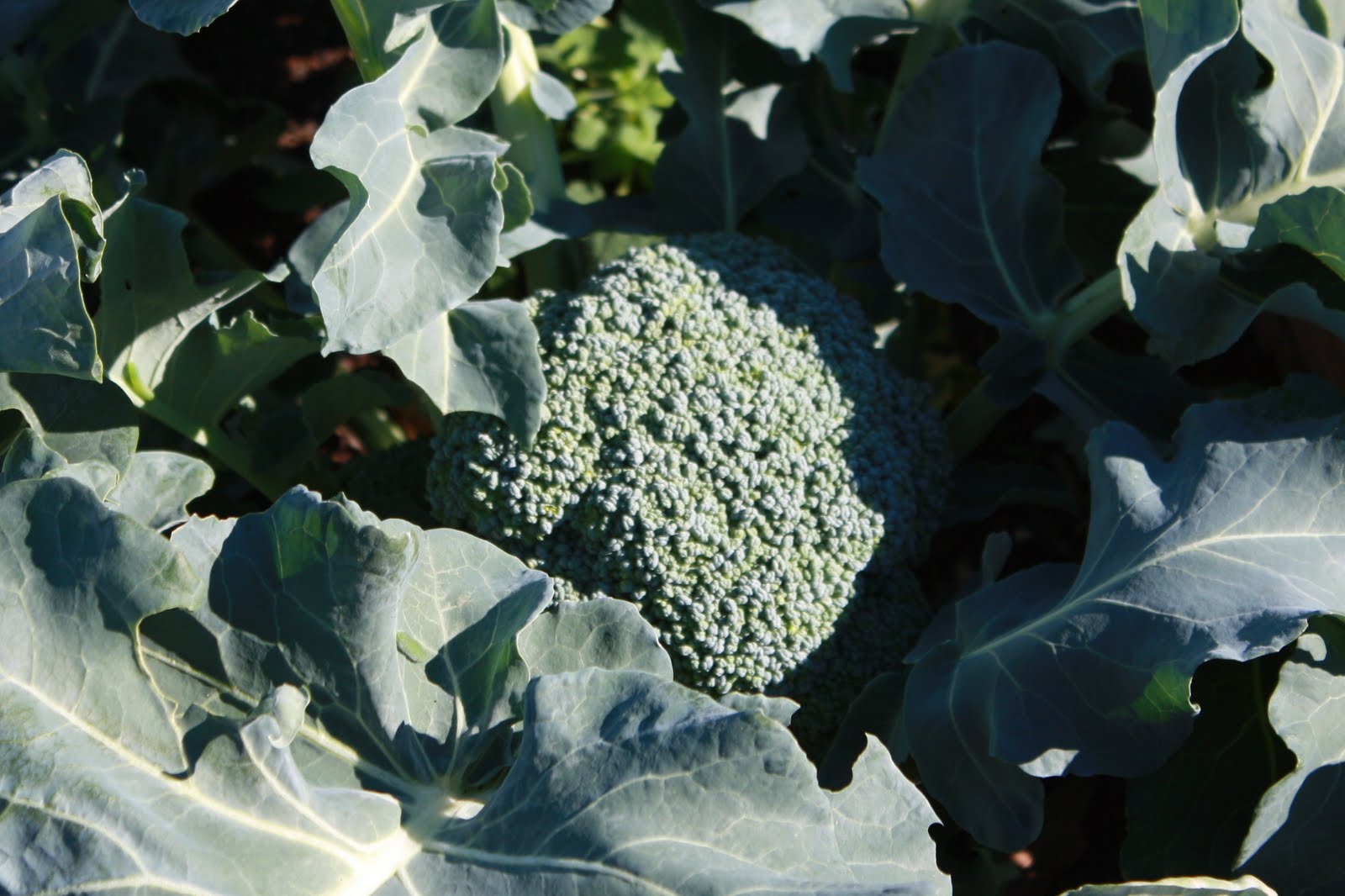
Last week, I moved cold frame hoops from one of the beds that will be dormant over the winter to the bed where the cauliflower are planted. I rained during the interim, so I wasn't worried about freezing temperatures. Yesterday was windy and felt cold, but the low was predicted to only get down to 39F so I didn't cover the plants in any of the garden boxes. I woke up this morning to learn that the low was at that time 34F and had been down as low as 30F in the yard. I think it will get cold again this evening. So this afternoon, I went out and put on the covers on the three raised beds. Fortunately, nothing had succumbed. The broccoli heads are getting big. We don't need them for our Thanksgiving meal, but I will need to harvest some of them soon, as there are four of them that are rather large.


While I was covering the last bed, I saw a bee exploring. So, I went to look at Doug's hives. All three of them had bees coming and going. I took a photo. They were orienting when I first looked at them, but not when I grabbed the camera. But you can see 4 or 5 in flight if you look closely. The look like little brown dots.

Thursday, November 10, 2011

Cold Frames


I'm trying it again. I've covered two of the cold frame hoops with plastic. The beds have broccoli that is just on its way to growing. I am hoping that this year, unlike last year, the cold frames will be able to keep things alive. I've covered them for the past week. I took the covers off today to allow the rain to soak as much as it could, although the rain was rather light. It's already 34 and Kathy and I just went out to put the covers on. There was already frost on the twin sheet that I have over the cauliflower. (I had to use a sheet because where I planted them I didn't have hoops installed.) It's frozen several nights and things have survived so far. I hope we weren't too late this evening.


Of course, I don't need cold frames over the onions or garlic. Last year, I had four covers. One of them had water in it when it was stored and when I tried to unfold it, it just broke apart. I have one left that I haven't tested. I may try putting that over one of the onion beds to see if it helps things along when it gets a bit colder.

Saturday, October 22, 2011

Weeding


There is a variety of weed that just proliferates in my garden during the winter. It starts as a small little thing and then just takes over. It has been too cold lately to get out in the morning or evening after I have come home from work. But today was a beautiful Saturday and so I made it my mission to get at least some of the weeding done.

My first task was to select a tool. I tried weeding the other day entirely by hand and didn't get too far. I need something that will go between the onions and garlic that are planted 4" apart. I've asked my creative with metal daughter-in-law, Leora, to see if she can make me something. But I realized I had tools at home that I should at least attempt to use. Kitchen forks are tools. I selected three from the arsenal to try things out with. The small fork was from our camping gear. I think it was an odd fork that we never threw away. The middle fork came from an old army mess kit. I really like it for peeling potatoes. I cook potatoes in the microwave for a couple of minutes and then use the tines to rip off the potato skin. It works really well for that purpose. The big fork is a serving fork.


As I tried each fork, it became obvious quickly that the serving fork was best suited to the job. The garlic and long red Florence onions were planted last and had the fewest weeds. I was able to clean up the soil and get weeds disturbed in those areas quickly. The yellow of Parma had been planted much longer. It took a lot of time to clean out that bed and I only got half way through it today. The photos below are before and after shots.

Sunday, October 9, 2011

Garlic Sprouts


I planted 48 garlic cloves and took a look yesterday to see how they were doing. I counted 24 sprouts. So half of them have sprouted. As I recall from last year, it seemed to take a lot longer for the cloves I got from seed savers to sprout than it did this year. I noticed that seed savers did not offer my variety, Chet's red, this year. I may plant some more when I get back from my trip so I can share the cloves with Seed Savers and others.

I still have a number of bulbs in the cold room at the office. i should think of a way to process them. I'm going to have to look to see what the options are.

Saturday, September 10, 2011

Broccoli Cauliflower

(br>It turned out to be a busy Saturday. After planting onion seeds, I went to Webster Brothers in Walkertown. It's the one place that I can guarantee finding cauliflower to plant. I haven't mastered the art of growing broccoli or cauliflower from seed. Maybe I will try it next spring.

On the way there, my son Jason asked me to help him install a ceiling light and fan. That took the bulk of the afternoon. The fixture was actually rescued from Jenna's room when I installed a new light there and Jason's baby room had a ceiling outlet for a light and fan, but nothing installed. It made for an interesting afternoon because, despite our thinking it through, we didn't understand until faced with the facts that there are two sizes of pipes that can be used to hang such fixtures from the ceiling. We learned this because we purchased the wrong one and had to go shopping again to find the right one. Then, we learned about how easy it is to trip a multibreaker and how challenging it is to reset one. But the fan and light were ultimately installed and worked.

It was evening before I got to plant the broccoli and cauliflower. I used my McDonald's straw trick to guard against cutworms. I installed the straws in the house before putting them in the beds. I put the plants in the beds with the poor soil. Things grew there; it just doesn't seem like the soil has much to it. I fertilized heavily and added a scoop of soil from one of the better beds right at the spot where the plants were placed. I think I will need to water regularly until the plants are established.

Garden Friends and Onions

My activity this past week has involved getting the garden ready for fall planting and planting some onion seeds. I had Sam and Taylor come over and finish cleaning out the beds. It was well worth the cost for their three hours of work.

I planted some onion seeds. This year, I am planting 4 to a square foot. That will give them a little more room. I also planted in a bed that is easier to water. I want to give them a little more water next spring than the yellow of Parma got last year. Hopefully, it will keep them from going to bloom prematurely. I planted 48 seeds from a purplish yellow of Parma onion that I had saved. It will be interesting to see if they turn out to be purplish, too. Then I planted seeds in 136 spots for true yellow of Parma. I had plenty of seeds left over from last year, so I used those rather than the seeds I had gathered from this year. I double planted so that there were at least two seeds in every hole. A couple of years ago, I didn't plant deeply enough and the seeds either didn't sprout or died shortly after. This year, the holes were maybe a half an inch deep, but not fully filled in when I was done. I hope they sprout and that they weren't planted too deep.

The rest of this entry is just pictures of garden friends that I've seen around.


Wednesday, August 17, 2011

Beans and Water


The middle of August is not usually the time to start planting. Most people are probably slowing down and just putting their garden to rest. I decided to keep things going. This is especially true because I hired to young men from church to help clean things up and (eventually) process the new horse manure I got.

I had them clean out one of the beds in which I had raised onions and garlic. It had gone to weed mostly. They brought in 8 loads of manure using the small barrow. It filled the bed to the brim. All that was left of me was to use the garden fork to turn it, fertilize, plant and water. (More about water in a moment.) I planted blue lake beans, 4 per square foot yesterday morning.

I had actually found enough ambition prior to their help to clean out the other onion bed by myself and plant Lima beans. The Limas have now sprouted. About 90% came up. Of these, I lost another 2-3% to animals taking off the first leaves. They seem to be growing well. I planted Limas at this time another year and had a fine harvest. Since I will probably be eating them by myself, there will surely be enough. I have more seed, but don't feel the need to fill out the bed.

Now about the water. When i was watering the blue lake bean bed, I sensed that, once again, I was not getting the water pressure I expected. I've had this happen before and found that it was the nozzle I was using that seemed to be the problem. I took off the nozzle and got a little better result, but it made me curious about whether or not there was something else going on.

I went to the place where the hoses all meet. In the past, I found a bit of blockage where the hoses meet the Y connector. I disconnected the hose that ran from the connector to the garden so I could see what was coming out and systematically eliminated all hoses but one and opened up that one's line and let the water run. When I did this, the water that came out of each was initially pretty dark with junk. Probably some sort of algae.


Here's what I think. The junk doesn't wash away because the water pressure is too stable and the flow is too slow when I turn on the hose. After all, there are 8 barrels feeding the one hose and the size of the connectors and size of the nozzle reduce what can go through the system at any given moment. So, algae start to grow in the hoses. The water pressure is probably even lessened a bit because there is junk growing in the hoses.

When this will become a potential real problem will be when (if ever) I finally get a slow drip system installed in the garden. Then the water will flow evenly, but slowly and junk will grow.

In the short run, one solution might be to cut off all but one or two barrels and just take water from those barrels. The water would flow faster through those hoses when they were in use. And, when the entire system was opened back up, the pressure of the backwash as the barrels filled back up again may help further clean out the hoses. Overall pressure during the partial shut down might be a little less, but I can live with that. I may only need to do this periodically as preventive maintenance. The other solution is to pour chlorine bleach into the system to kill the algae. Not a good idea. If the water in the hoses is as stagnant as I think the chlorine might not get where it was needed and there are doubtless environmental impacts I would rather not have.

Sunday, June 26, 2011

Garden Update


This will just be an update on the progress of various plants in the garden. I am going to start with the cucumbers. Both varieties are growing. I picked a small parade cucumber the other day. I am growing them for pickling, but we used it in a salad. Mostly, we just have growth of the vines, but the vines are being trained nicely on the netting. Perhaps there may be a few too many plants (12 on each end of the raised bed) and that is keeping bees from pollinating them because the flowers are hiding under so many leaves. I hope not. I think they will thin out a bit as the vines grow taller.


There are now tomatoes. The photo below is a Hungarian Heart. True to its name, it is somewhat heart-shaped. I have the one large plant that was planted early and was hearty enough to have withstood the early cool weather. I have one medium plant that I grew indoors after the early plants died. And I have 6 plants in the bed that grew from seed. The seedlings are not very large yet, but are alive and growing. There is also one Rutgers in the bed.


The John Baer tomatoes are growing and starting to produce fruit. I noticed some evidence of early blossom rot on some of these, but others seem to be doing well. Of the three varieties, they are at this time the smallest in size.


The Italian Heirloom, despite my misgivings about the poor soil they were planted in, have grown very well. The fruits are generally a bit larger than the John Baer tomatoes and all the plants seem to be producing at about the same rate.


I am finally getting zucchini (pictured) and yellow squash (not pictured because it was out of focus when I got it into the computer and we ate it for dinner, so there is no second chance for a good photo). No bugs yet on these plants, although I know they are coming.

Tuesday, June 14, 2011

Onion Harvest


The onion harvest is beginning. Last year, I remember that I started too late and then, by leaving the onions out in the sun after they were picked, many of them went soft. I am starting earlier this year. So far, I haven't harvested many, maybe two dozen of the long red Florence. There are maybe a dozen left of that variety. They turned out to be a very nice size. There could be more of them, I suppose. But I am very happy with what I have. I'm not sure quite how to store them. I am thinking that some will need to be diced and frozen. I would like to keep some for fresh use.


I picked two dozen of the yellow of Parma. Even though there are fewer than I expected, they are all nicely sized. I may get a few more from the Parma bed. One question I have about the rest of the Parma is whether to save the seed or not. The seed all come from early bloomers. I doubt that it was genetics that caused the early bloom, I attribute it to environmental conditions. If it is genetics, I may be perpetuating a one-season variety. Of course, I don't know. Perhaps I will save seed and plant these seeds separate from the left over seed I have from this year and see if there is a difference. It may not be a strong test given that the seed will all be related anyway and one generation cannot possibly make that much difference in genetic variation.

Monday, June 13, 2011

Catching Up


Come June, there are always a lot of things that start happening with the garden. I'm just going to race through some documentation so that I might be able to keep track of when I started things and how things are proceeding at this point in time.

Jason and I planted 24 cucumber plants from seedlings that I had sprouted indoors. Half (12) were Parade, which I believe are for pickling. The other half were Japanese Climbing cucumbers, which I believe will be for salads. Each of the 24 seem to have taken hold. I have one that is ready to climb the trellis I installed. I added a little fertilizer and compost. They seem to be doing well, but things are going slow.

The tomatoes are growing but I have yet to see any set fruit. The exception is the box where I planted Hungarian Hearts, followed by Rutgers. All but one of the Rutgers have died. I suspect I have what Clarence Brown refers to as tomato wilt. But, i planted more Hungarian Heart seeds and have at least half a dozen of those that have sprouted. Sort of a lame bed in many ways. I had such high hopes. Perhaps the seedling Hungarian Hearts will yet grow and produce.

The yellow squash (below) and zucchini are disappointing so far. But, I understand why. The beds they are planted in have very poor soil that is really just mulch. The only reason the Italkian Heirloom tomatoes are doing well (I am convinced) is because of the soil I added when I transplanted them. Nonetheless, they are now starting to grow. I added a little fertlizer to get them going a bit better. It's keeping them watered that is the real challenge. The mulch doesn't hold water well.


I planted three varieties of green bean Saturday and this morning in the same poor soil. I added as much compost as I could and then stole some soil from one of the older beds to try to boost water retention. I also fertilized heavily. I guess time will tell. I believe I will have to water morning and evening until they sprout. It's rained the past several days, which has helped. (The barrels are full again.)

My yellow of Parma onions have gone to bloom. They were so healthy early on. The ones that haven't bloomed have nice large bulbs. I'm at a loss to understand exactly why this happened. I have two ideas: water and spacing. I am hoping to eventually add a drip system and can plant next year's crop 4 per square foot instead of 9. The long red Florence have not suffered this fate.


Finally, I have some peppers that have sprouted and should be ready to plant soon. They are outside now.

Friday, May 20, 2011

Slow Tomato Progress


Gardening is a always a philosophical endeavor. It is entirely practical, of course. But when you fail, like I seem to do often, it makes you stop and think. I'm not sure thinking does me any good, but I'm bound to do it anyway. I've taken stock of the state of my tomato plants. Here is my brief report and analysis.

I have one strong Hungarian Heart plant (shown on top) and smaller one planted last week (not shown). The strong one seems to be doing everything I would want a plant to do. i am hoping the smaller one will survive and starting growing new leaves soon. I've planted two seeds directly in the garden in hopes that something might happen. I understand what my problem has been. I planted the first batch too soon, probably the second batch, too. But I think there is another problem that I need to figure out how to address if I am going to start tomatoes from seed. I think the planting mix I used is very low on nutrients. There was just too much yellow instead of green from the moment the plants got true leaves.

My pride aside, I want tomatoes. So, for the other 12 spots in that raised bed, I went to the Farmer's Market and bought some Rutgers, which I planted yesterday evening. They plants (second photo) also have a little yellow in the lower leaves, but they are hardy otherwise and will surely grow.

I assume the nursery planted the seeds at the same time as the rest of their crop, so I have benefitted a bit by waiting. I think they will do just fine. I was tempted to ask how they do it, but I doubted I would get an answer that would really do me any good. There is something technical I need to learn. More than anything, I think I need to find out what the missing ingredient is and learn where to buy it.

The John Baer tomatoes (third photo) are all alive and are about the same size as the Rutgers. They are a little spindley still, but are green and seem to be growing. I added some 10-10-10 to boost growth a bit. I'm not sure what else to do other than wait. At least there are 16 plants that are alive and growing. New leaves have come out on all but a few of these plants.

This time of the year is a little frustrating for those who want quick results. Tomatoes need to establish themselves and the roots need to grow before the tops are going to take off. I remember feeling this way last year and then, all of a sudden, things take off and the tomato plants seemed to grow too fast. I understand that fast stem growth does not equate with productivity. Except for the Rutgers, these are all untried varieties for me.

The Italian Heirloom are doing well in terms of color. They were smaller in the jiffy pots when they sprouted and they are still a bit smaller. But I think they like the place where they reside. I gave them a little extra 10-10-10 yesterday, too.

So, instead of 48 plants, I currently have 46 with the potential for 2 more if seeds sprout and grow.

Saturday, May 14, 2011

Tomato Cage Solution


There may be no real solution to trellising tomato plants. I know Mel Bartholomew advocates a trellis structured by weaving netting over conduit frames. I've tried that in the past and for other plants, like cucumber vines, I like it.

Last year I just used wire cages and when a big wind came and the vines were heavy, they all fell over and couldn't be righted. I am trying a different solution this year. I already have conduit hoops over the three raised beds where tomatoes are growing. My idea this year is to anchor the wire cages onto the conduit hoops.

I used cable ties (cheap, strong, and easy to use) to tie each cage to the conduit hoop it was closest to. I made sure a vertical member of the cage was adjacent to the hoop so I could catch it in the tie. I also adjusted the height of each cage so that one of the wire hoops in the cage was also in the cable tie.


As an added measure, I put cable ties around the top wire hoop of the cage where they touched.


I gave it a quick shake test with my hand to see how sturdy this system felt. I suppose there are things that can still go wrong. A strong wind in the right direction can still move the cages by sliding them along the conduit. The ties may break. Who knows? I think it will be better than last year. Time will tell. However, given that the conduit was already in place and the cages were in hand, it seems the logical thing to do.