
Showing posts with label bees. Show all posts
Showing posts with label bees. Show all posts
Wednesday, March 14, 2012
Starting Over
Spring! Temperatures today got to 82F.
I decided I needed to look at the hives. Both were weak. I didn't see evidence of a living queen in either. I think I need to find a queen, or find a way of making a queen. I probably need to combine the hives. Interestingly enough, there was ample honey and, with the temperatures where they are, nectar will be right around the corner.

Sunday, November 27, 2011
Reduced Hives
I took the top super off of Doug's three hives and set them about 30 yards away. There was some wax that needed to be cleaned near them, so, if there was any honey in the supers, I'm sure the bees will take it away. In the photo, the left most hive had the guard bees that were most protective of my entering. When we moved the hives to my yard, the right most hive seemed to be the meanest one. They were rather gentle this time.

I also took the top two supers off of my hives in Clarence's yard and set them about 15 yards away. When I checked yesterday after church, they were being cleaned as well, although I doubt the top supers from each hive actually had anything in them. My bees are most gentle. I don't think I had a guard bee come after me at all.
Thursday, November 24, 2011
Still Alive
Admittedly, not much happens in the garden or with bees on Thanksgiving. However, I have a small report to make.
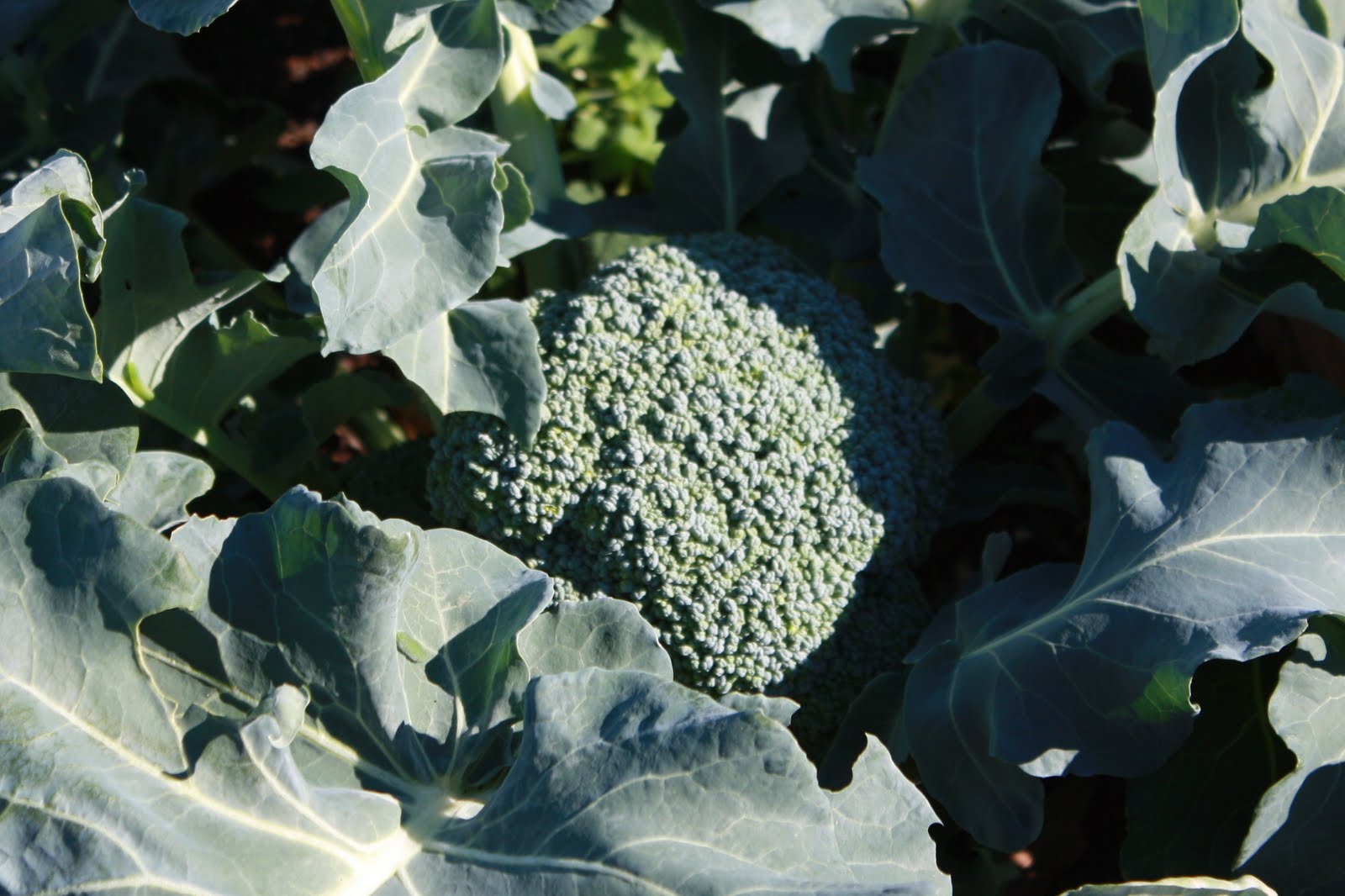
Last week, I moved cold frame hoops from one of the beds that will be dormant over the winter to the bed where the cauliflower are planted. I rained during the interim, so I wasn't worried about freezing temperatures. Yesterday was windy and felt cold, but the low was predicted to only get down to 39F so I didn't cover the plants in any of the garden boxes. I woke up this morning to learn that the low was at that time 34F and had been down as low as 30F in the yard. I think it will get cold again this evening. So this afternoon, I went out and put on the covers on the three raised beds. Fortunately, nothing had succumbed. The broccoli heads are getting big. We don't need them for our Thanksgiving meal, but I will need to harvest some of them soon, as there are four of them that are rather large.
While I was covering the last bed, I saw a bee exploring. So, I went to look at Doug's hives. All three of them had bees coming and going. I took a photo. They were orienting when I first looked at them, but not when I grabbed the camera. But you can see 4 or 5 in flight if you look closely. The look like little brown dots.

Saturday, October 8, 2011
Feeding Doug's Bees
Doug left me with four and a half gallons of honey to feed his bees. I surely wasn't going to do it the first week they were here. They had been nasty animals when we were getting them moved. Then there were storms, busy Saturdays, and other excuses. But, I knew the plan was to feed the bees so that they would be ready for winter and winter was not yet. It has been getting a bit chillier lately, however, and so it was time Saturday to feed them.
My first task was to take off the covers and just inspect. Two of the three hives looked as if they had capped honey in the top supers. The photo below is from the nastiest of his hives. It came with two supers and it looks as if there is honey all the way up. The middle hive was the weakest coming in and looked to be the weakest still. The first hive was in between.

After pulling the tops and taking a look, I put an empty super on each with a top feeder following on top of that. I poured honey into each from the gallon containers Doug had left me. The weak hives got about two gallons each and the healthy hive got about one. We still have a bunch of yellow jackets and other invaders around, so I took the practically empty containers into the house and drained them off into my own stocks. It didn't amount to much, but thanks Doug for the small donation.

So now each of the hives has an extra super and a supply of honey to store. I won't be able to check back on the progress of the bees at storing the honey for over a week because I am traveling. My guess is that they will store it very quickly and that by the time I get home, there will be nothing left in the top feeders.

Just as a side note, Doug's bees are still pretty defensive. I was buzzed by all three hives as soon as they were opened. However, they left it at that and when I had walked away 20 feet, they didn't follow. I like bees to be a little protective. I think it makes them healthier. Just looking at the entrance during the day, they are still actively foraging.
Tuesday, August 23, 2011
Doug's Angry Bees
My buddy Doug is moving to Memphis. FedEx closed his position in Greensboro and so the move to Memphis is the result. He was originally going to try to take his bees with him, but there were too many things happening. So I told him I would take them. He came over and made a spot in my natural area. It's where I'm going to move one of my hives from Clarence's when it's time, so this is a good preparation for it. Doug will take them to his new place in February when they are pretty much dormant.
He brought them over this evening. One or more of his hives were not pleased to be moved. Doug had been stung at his house before arriving here, so he was a magnate for his angry bees. He must have had 20-25 stings by the time he was done. They transferred their anger to me as well. I got stung twice on my neck and once on my ankle. They followed us all the way from the natural area into the garage.
I am now lathered with and ingested of benedryl. Once the stingers came out, the pain has subsided, but the stings feel hot. Alas, no anaphylaxis. I hope they settle down a bit. Fortunately, being in the natural area keeps them away from a lot of stuff.
It's amazing what we will do for those we love! Doug does love his bees!

Saturday, August 20, 2011
Honey Pests
It's yellow jackets. They are the pests.
I set the equipment and supers after extracting honey out into the yard. Bees immediately found the stuff and began cleaning it off. But I guess I left it too long, or maybe this is a normal part of the process, but I got hordes of yellow jackets, too. After the bees had long gone, the yellow jackets hung around.
I finally went out in the yard with my bee suit on to carry some of the equipment away. The yellow jackets followed and seemed to find me more interesting than the equipment. So I stood there for 30 minutes, waiting for them to get on my arm or belly where I could kill them. I probably got a couple of dozen. It didn't put a dent in their colony. It just felt good.
Now that the equipment is gone and the wax more or less cleaned up, I see just a few. It will help next year if I have a hive in my own yard again. Then I can put the supers back on the hives. I will remember (I hope) to move everything further away from the house.
Sunday, August 14, 2011
3 gallons
I pulled two supers last Saturday, one from each of my hives. I left them in the Volvo wagon, partly because there they wouldn't attract other bees who would start robbing honey and partly because I was lazy or busy (I can't remember). I had intended to spin them out last Saturday, but Doug hadn't finished spinning his own out and, toward the end, he started getting stung quite a bit because he couldn't keep the bees out of his garage. We knew it was time to quit. I picked up the extractor on Monday, but didn't get to any spinning. By Wednesday, Red came by to mow the lawn and noticed that something was leaking in the back of the Volvo. So, I clearly left the hives there too long.
I pulled the supers into the garage and made sure I kept the doors closed. I put tin foil under the supers to gather any honey that leaked out (and there was a bunch leaking). Thursday I had a church meeting that went until late. I think I got home at 11:15. So, my major work started on Friday morning, when I spun out the frames.
I ended up with three gallons of honey out of a small and medium super. The small super actually provided more because there were no brood frames. I should have check frames before I pulled the super. Actually, I did check on the top super, but the comb had not been capped, so I went one below and didn't check on that one. Next year, if I can remember, I need to check all the supers I pull, frame by frame to see if there is any brood. i should pull those that have any brood and put them together into one super.
I gave three quarts to Clarence, my arrangement with him is to give him a quarter of the hone for keeping the hives on his land. I've bottled the rest and let the bees and yellow jackets clean off everything that is left on the surfaces of whatever I used to extract. This year's honey is quite a bit darker than my previous batch. I'm not sure why. It tastes just as good.

Monday, August 1, 2011
Different Kind of Split
It had been weeks since I went into the hive. Clarence needed to cut the grass in front and he had been stung a while back. I also had left an entrance reducer in on the swarm hive (No need to leave a colony vulnerable because the entrance is too big when they are weak.) But, the hive had grown strong and it was time to pull the entrance reducer out. I also wanted to see how crowded things had become. So I gave Clarence the spare veil and we went in.
The bees were indeed starting to show signs of being crowded. In both hives, the top set of frames were drawn and loaded with honey. I went back today and added extra boxes to each. None of the frames are drawn and I don't expect them to change much between now and when we harvest. But they have more room.

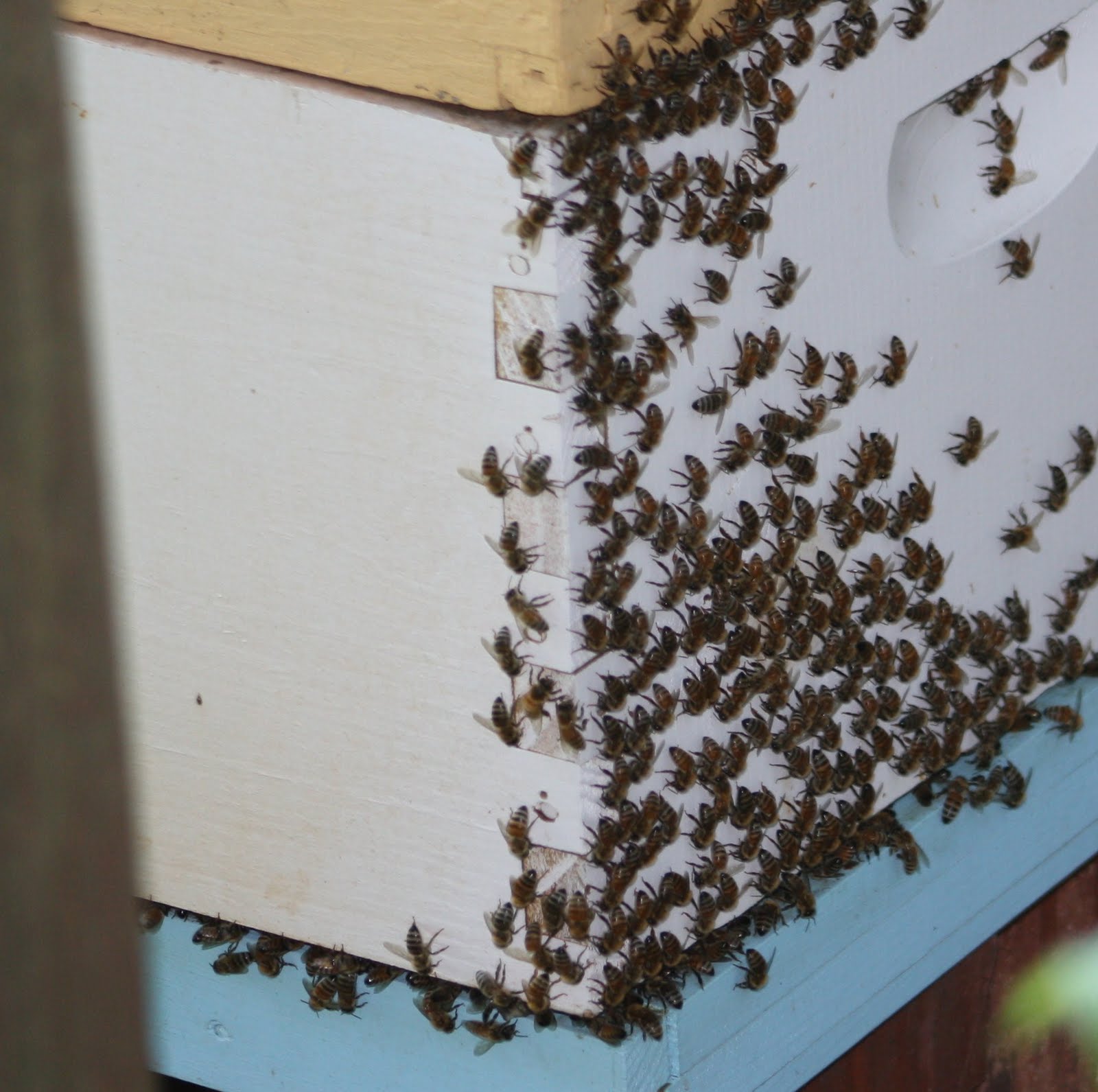
I noticed one thing that was very odd. The swarm hive had a lot of bees hanging around the back. At first, I was just totally confused, wondering if my smoking them had driven them back there. Then I realized that the brood box doesn't sit quite right on the bottom board. There is a small crack -- a different kind of split if you will -- that runs around the back corner. The photo below is actually of the right rear (facing from the front) corner of the hive. The crack is very slim, but it is enough to let them out and they seem to really like hanging out there. I'm not sure how this happened exactly, or how I will fix it, or if I will fix it. The hive seems happy otherwise.
Friday, July 1, 2011
Bumbling Beekeeper
I executed the beekeeping plan, only to have a couple of things turn out differently than I had planned. First, there were three frames full of capped brood in the box that was supposed to be devoid of any brood. Second, most of the honey in that box was not capped and therefore not adequately cured.
We did extract honey from one of the brood frames, because the caps had ripped off and it was a mess, but we left the other two frames with brood alone. We extracted honey from the other frames, a little less than a gallon.
I put the box in the bottom position of the swarm hive and put the extracted honey on top of the hive inside a top feeder. It rained a bit in the evening, so I put the fume board on top of it, just slightly askew so the bees could enter and exit but so that it wouldn't get washed out. (I assumed the fumes had all disappeared by that time.) When I checked back, the honey was all gone, so I presume the bees from both hives robbed it and I will get it back if I end up harvesting this year.

I ended up needing two fewer boxes. The frames in the brood box I had placed on when the bees swarmed was not drawn even a little bit. There was a super that had new frames that were modestly drawn, but just barely. Both have come home with me.
Saturday, June 25, 2011
Goofy Bees
It has been almost 4 weeks since the bees swarmed. That is enough time for the queen to have laid eggs and the brood to have hatched. It is also about a week and a half since I combined the hives. So, I needed to go in today to check on the status of things. Doug Shaw was in town and it was good to have a buddy with me.
The first hive, which is the split hive, was very full. There was honey and bees everywhere. All the supers were full, including the top box (white and on its side in the photo), which was the original brood box from the package hive. So, I added an empty super. The frames have new foundation in them so the bees will need to draw it. I think the bees in this hive are pretty ambitious. We'll see how they do.

The second hive, which is the swarm hive, was not so progressive. When I did the swarm capture, I put a brood box with new foundation in it. The bees had not drawn a single frame. There was also a brand new super. The bees had only drawn part of a couple of frames. The third box up must have started with some drawn comb, because that was where the queen was. It is a small super, so there isn't much room to lay eggs, but there was capped brood there.
I'm relieved that the queen is laying, but disturbed that there hasn't been any more progress at drawing comb or laying nectar up.
Here is my plan. On Monday, Doug and I are going to take the top box off of the split hive and extract honey from it. I will let bees clean off the left over honey so that the frames are clean. I guess I will just put the box outside the hives and let the bees go to town. I expect it won't take them long. Then, once it is pretty clean, I will put the box in the swarm hive. I have yet to figure out exactly where I will place it. My current thinking is to place the current brood box (the small super) at the bottom of the hive and put the brood box directly above it. I doubt the queen will want to move down, so offering her drawn comb to move up into sounds like the most reasonable alternative. I may also shift around some other boxes, but I'm not sure. There is a nearly empty box with just a little drawn comb that is now just above the brood super. If I take it away and there are eggs laid there, I wouldn't like that. So I may keep it in the hive but above the true brood box. I'm thinking.
Thursday, June 9, 2011
Combined Hives
The odd swarm from the first hive required that I combine what was left behind without a queen. I decided to split the hive boxes up. The two supers went to the hive in which I placed the swarm, which I have been calling the third hive. The brood box from the first hive, which is now just filling up with honey since there is no queen, no brood, and was the lowest box the bees could get to, was combined with the second hive. In the case of the second box, all the bees are at least first cousins and perhaps some are still sisters. The bees in the third hive were all sisters with the bees in the first hive. I did the usual, putting a piece of newspaper with slits cut in it between the existing hive bodies and the boxes that got placed on top. The only other adjustment needed was to remove the top feeder from the third hive.
Doug Shaw is out of town, so I pulled a couple of men from church. Randy Daniels actually put on a veil and gloves and kept the smoker going. Before it got handed to Randy, Parker Funk got the smoker good and lively for me. Ray Teague pitched in with a tool when I thought I had lost my hive tool, which I found on top of the hives when I actually got down to them.

So, technically, I guess I need to renumber hives. Maybe I will do that. Maybe I will just name them differently, east and west or split and swarm. I have to think about it.
I went by this morning to inspect. The split hive was very lively. I think brood had recently hatched and there were a lot of orienting flights. The swarm hive is a bit quiet. They haven't had time to produce young bees yet. They've only been in the hive 11-12 days and they started with no drawn comb.
Saturday, June 4, 2011
Problems with Quick Swarms
I went in to the hives today to see if they needed any additional supers. All the sugar water I had left for the newest hive (the one on the right) was gone and there were no dead bees sitting in the top feeder. None of the other hives needed any new supers.
The oldest hive (the one on the left) had not progressed at all in terms of the bees storing more honey. We left it as it was, but then I thought about it and came back later. It was my experience last year that a premature swarm can sometimes be just that; premature. Last year, when I had just installed a hive, within a week or two it swarmed. I gathered the swarm into a new hive. I turned out that the old hive had no queen. In the end, neither colony was strong enough to defend itself from wax moths. As I thought about this, I realized that I may have the same situation this time around as well. So, I went back into the hive a little later. I'm afraid I may have the same situation this year. I pulled out every frame from the brood box of the original hive and found no evidence of a queen laying eggs whatsoever. I saw no evidence of the bees making a new queen either. And, by the end of my observations, I found that I had a very angry hive; another sign that the hive is queenless.

I need to go back in and combine the three boxes with the other two active hives. I have evidence from the middle hive that there is a good queen because there were capped brood cells all over the place. I trust the other hive also has a queen because they clustered around her when I caught the swarm.
Sunday, May 29, 2011
Quick Swarm
 After church today, I got a call from Clarence. One of his grand daughters, Catherine, was walking in his backyard and saw a swarm in his youngest apple tree. I thought I had taken care of the risk of a swarm when I split the hive and added a super. Evidently the bees didn't agree.
 So I dropped everything and went to Clarence's. Fortunately, the swarm was located on several smaller branches of the tree, easily within reach. They were heavy enough to have bent the branches, so the swarm wasn't a small one. But then, I'm not that exerienced with swarms to know if they are all about the same size. Clarence took his loppers and cut the branches. He actually had to do it twice because there was a sizable swarm still left on a branch that wasn't cut the first time.
 Before I left to go over to Charence's place, I had to rescue some hive parts. This is where I should have been a bit more diligent in taking care of things last year when the moths took out the hives in my yard. I was just upset and, assuming that I would not need them again, I left the base and brood box and telescoping cover in the yard. I had new foundation on frames that were in the garage. This is not the way to start a hive, but it was the best I could do on short notice. Fortunately, I had a small super that was drawn out so the bees will have a place to store honey when they start foraging. I plan on returning tomorrow and swapping out some brood frames from other hives to give the queen a place to start laying eggs (other than in the supers).
 Of course, I'm not totally sure the queen was with the rest of the bees when I shook the branch into the hive, but I presume she was. They seemed content to have a hive to be in.
So, now I have three hives. I had already planned to go in tomorrow to check them out. I hear the nectar flow is very good. I hope I have enough supers to supply them. Doug has offered to help out.
The only other comment I want to make was that it must be very humid outside. I came back home totally drenched from the half hour of work.

Wednesday, May 11, 2011
The Split
I went back in the hive with Doug and decided it needed to be split. The challenge I didn't anticipate was how quickly the bees would multiply and how quickly they would store honey. When the hive become too crowded, they did what bees have always done; they decided it was time to swarm. There were a number of queen swarm cells, one of which was already capped.
Doug provided the extra brood box and I used a super that I had left at Clarence's place last year to make the split. (Fortunately, the foundations were still in pretty good shape, but not yet drawn out.) We swapped out 4 frames from the super, all but one with swarm cells on the bottom edge. We also took three frames from the brood box, two of which were loaded with capped brood cells and one of which was loaded with honey. The original hive was still loaded with honey and lots of bees, so I brought another super over a little later and put it on top.

The new hive does not appear very busy yet. There are fewer bees and I think most of them must be nurse bees and not foragers. They will have new bees and a new queen soon, and they have enough honey and pollen to survive until then.
After working on my bees, I went with Doug to inspect his hives. All was well until I took off my gloves at the end as I was walking away from his hives. I guess there was a bee on a glove that didn't appreciate my presence. I don't mind a sting every now and then. I just wish I would have taken off my wedding ring as soon as I had been stung.

Sunday, May 8, 2011
Very Healthy Hive
It was past due for me to check out the hive that I requeened. Jeff and I went in to look. The super was totally full of honey. They had capped a fair amount. Getting it off took some effort it was so full. And this is only May and I thought that the new queen would barely have laid any eggs. All the frames in the super were full and there were plenty of bees. This photo was from the edge frame and it was already full of honey.

Indeed, when I took off the super, they were already creating swarm cells, the hive was so crowded. So, in the end, losing the Georgia queen wasn't a bad thing at all.
I added a super I happened to have. It has no drawn frames, but if the bees have been as successful as they have been so far, I have few worries.
Thursday, April 14, 2011
Queen Cells
Seven days ago I put two frames in the hive that originated from Doug Shaw's strongest hive. One was a super, one was a brood frame. I was pretty sure one of them had eggs or very young larvae. We went back in today, based on Rob Jacobs' advice to see if queen cells had been started. We found one on each frame.
The photos that follow are from the super frame. The queen cell is on the bottom of the frame, just like a swarm cell would be. I'm not sure exactly how the egg or larva got into that position, but the bees seem to like it there. There was one bee that seemed to be especially engaged with the cell. It took a little patience to wait until this nurse bee was through to get the shot of the open cell. This is good news!


The second frame, the brood frame also had a queen cell. This cell was more in the spot you would expect of an emergency or supersedure queen cell. I wasn't quite as impressed with nurse bees, but then caring for the queen cell may be sporadic or I may just have not seen it, I didn't want to be in the hive all that long.


The bees seemed very happy. There was plenty of pollen and honey. I am not feeding because they are close to a nectar and pollen source and there is no need for them to draw new comb.
I have two possible queen cells! May the best one win!
Thursday, April 7, 2011
The Bee Story
There are no pictures with this.
I posted a request on the Guilford County Beekeepers Association forum, describing my problem with the dead queen. Here is the text and several follow-ups:
Me: I picked up my package from the club on Sunday and installed it. At the time of pick up and installation, the queen was alive. She never made it out of the cage. I now need a new queen. I've called around. Local suppliers won't have queens until about May 1. There is a California supplier who has a 2010 queen for $20 plus $25 or so for shipping. I'm hoping to avoid that.
My current thinking is to combine the new package with an existing hive and wait until a queen becomes available locally when I can split the hive again. Any opinions? Any other options?
Ski: An option would be to put a frame of brood with eggs in the package hive and let them raise their own queen. Drones are available now so 16 days plus from now should provide that many more mature drones. But I have not played around that much with packages.
Wally: I would go with the frame of eggs, but leave the bees on it. There will be a little fighting at first, but they will settle in shortly. The extra bees on the frame will give the package a boost.
Me: I went in with my buddy Doug and looked through three of his strongest hives for a frame with new eggs. All of his queens had chimneyed with brood in the brood boxes as well as in the supers. We found the queen and, avoiding the frame she was on, picked a brood frame and a medium with very young larva as well as some young ready to hatch.
I replaced a brood and medium super frame in the new hive. The packaged bees had drifted to port in both the brood box and the super, so I placed the new frames a little to starboard, hoping they would accomodate more easily. (I had some loose bees in the nuke box I carried the frames over with, so I just dumped them on top and wished them luck.)
So, now I wait. Any more advice?
Jacobs: You can give it about 4 full days and then look for queen cells. You should see them by then. If you have other bee hives around (and maybe even if you don't), you may want to use blue or green painters tape (the kind that you can pull off without leaving glue on the hive or pulling up paint) and put it on the front of the hive in wonky patterns. This may help the queen recognize and get back to the right hive when she orients and goes up for her mating flight. The link below is to Michael Bush's bee math. It will give you an excellent idea about what you should be seeing when.
http://www.bushfarms.com/beesmath.htm
So, that's where it stands.
Wednesday, April 6, 2011
A Dead Queen
The queen was alive when she was installed. She never made it out of the cage. I think we need to reconsider the bottom loading-on-a-stick method.

There are no queens for sale locally. None will be available until about May. Doug and I will deal with this in one of two ways. We could combine this hive with one of his until a queen becomes available and we can split it out again. Or, an option posted by one of my fellow beekeepers is to take a frame of newly laid eggs and let the bees make their own queen. I like the last option best.


Sunday, April 3, 2011
New Bee Package
The new package of bees arrived today. I purchased it from the Guilford County Beekeepers Association. I think they got the packages from Georgia. I'm not thrilled about that. I have developed a belief in local bees. But, I decided to take what I could get.

I am putting the bees in Clarence's yard again. The one thing Doug Shaw suggested was inserting the queen cage into the hive in a different way that he had read about recently. We parepared the cage the same way you normally do by taking out the cork and poking a hole into the candy. What we did differently this time was to attach a bamboo shaft to the side of the cage. We wired it on. I guess a rubber band would have worked as well.

Then we put the cage at the bottom of the brood box. The idea will be that we won't have to open the hive by taking off the super to check the release of the queen and pull out the queen cage. We can just pull the bamboo stick out to do that.

The other thing we did was to reloacte the hive a bit. It used to be in the shade a bit more than I liked. So we moved it into the sun and angled it to the south east.

By the time we left, the bees had already oriented and were starting to go after Clarence's holly bushes that have just come into bloom. The good thing about this installation is that there was already pollen in the hive and all the frames were fully built out so no new wax need be created. They can just start storing nectar and making honey.
Saturday, February 12, 2011
Getting Going 2011
It has taken me a bit of mental energy to get myself started this year. I think the winter has been so cold that it has discouraged me somehow. Things in the winter garden just didn't amount to anything. The bees all died. The greenhouse is missing panes. But I've realized you need to move forward.
This week I went to the Guilford County Beekeepers Association meeting. I haven't been able to go for some time because of family history duties. I decided to get a new package at least for the hive in Clarence's yard. Larry Tate is selling, so they are going to be local bees, which is a plus. The meeting had an extra benefit. I talked to Jackie Wiggers to see about getting the feral hives. She suggested I talk to Tom Sawyer who has done extractions before. I called him. There is nothing scheduled yet, but I am at least moving forward. I went by Clarence's this morning with Doug Shaw and cleaned the dead bees out of that hive. There is a place ready for either the package or the feral colony.
I also ordered seeds from Seed Savers Exchange. I looked for some of the varieties that I had planted in the past, purchased from local stores. They didn't have the exact varieties, like Rutgers tomatoes, that I was looking for, but I decided to take what I could. Here is what I have ordered.
Bean, Provider OG, Packet 50 seeds
Bean, Empress , Packet 50 seeds
Cucumber, Parade OG, Packet 25 seeds
Cucumber, Japanese Climbing OG, Packet 25 seeds
Pepper, Tollies Sweet OG, Packet 25 seeds
Pepper, Bull Nose Bell , Packet 50 seeds
Tomato, Italian Heirloom , Packet 50 seeds
Tomato, John Baer OG, Packet 25 seeds
Tomato, Hungarian Heart , Packet 50 seeds
Bean, Fin de Bagnol OG, Packet 50 seeds (back ordered)
I still need to order rhubarb and sweet potatoes. But it is a start.
I think the challenge here is a philosophical one. It is getting started when you don't have all the motivation in the world. I still have a pretty deep commitment that the garden and bees are things that need to be done. I continue to sense a challenge to long-term survival and the only way to deal with it I know of is to prepare in every way I can. There is no imminent threat. But, unless you prepare when the threat is far away, you can't respond when it arrives.
I was reminded how quickly things can change this week. I walked out the front door to start my daily walk with the dogs. A package had arrived and was sitting on the door step. I tried to step around it, felt my ankle give way and ended up on my back. It all happened so fast. There was truly no way to prepare. I recovered, went on the walk with a weakened ankle (that recovered as I walked because I have sprained it so many times that I guess more real damage wasn't done). But it was how quickly it happened that caught my attention.
The world can changing rapidly. Tunisia a couple of weeks ago. Eqypt this week. Centuries ago it was the Mongols charging through China and the Middle East and the black plague sweeping through Europe. Decades ago it was Germany and Japan. Best to be prepared. Best to know when to leave and have something to take with you when you go.
Subscribe to:
Posts (Atom)